How it works

How the Conductor works.

One prompt goes in. A finished, verified result comes out. Here's the whole loop — planning, a fleet of real Claude Code sessions, and a shipped PR.

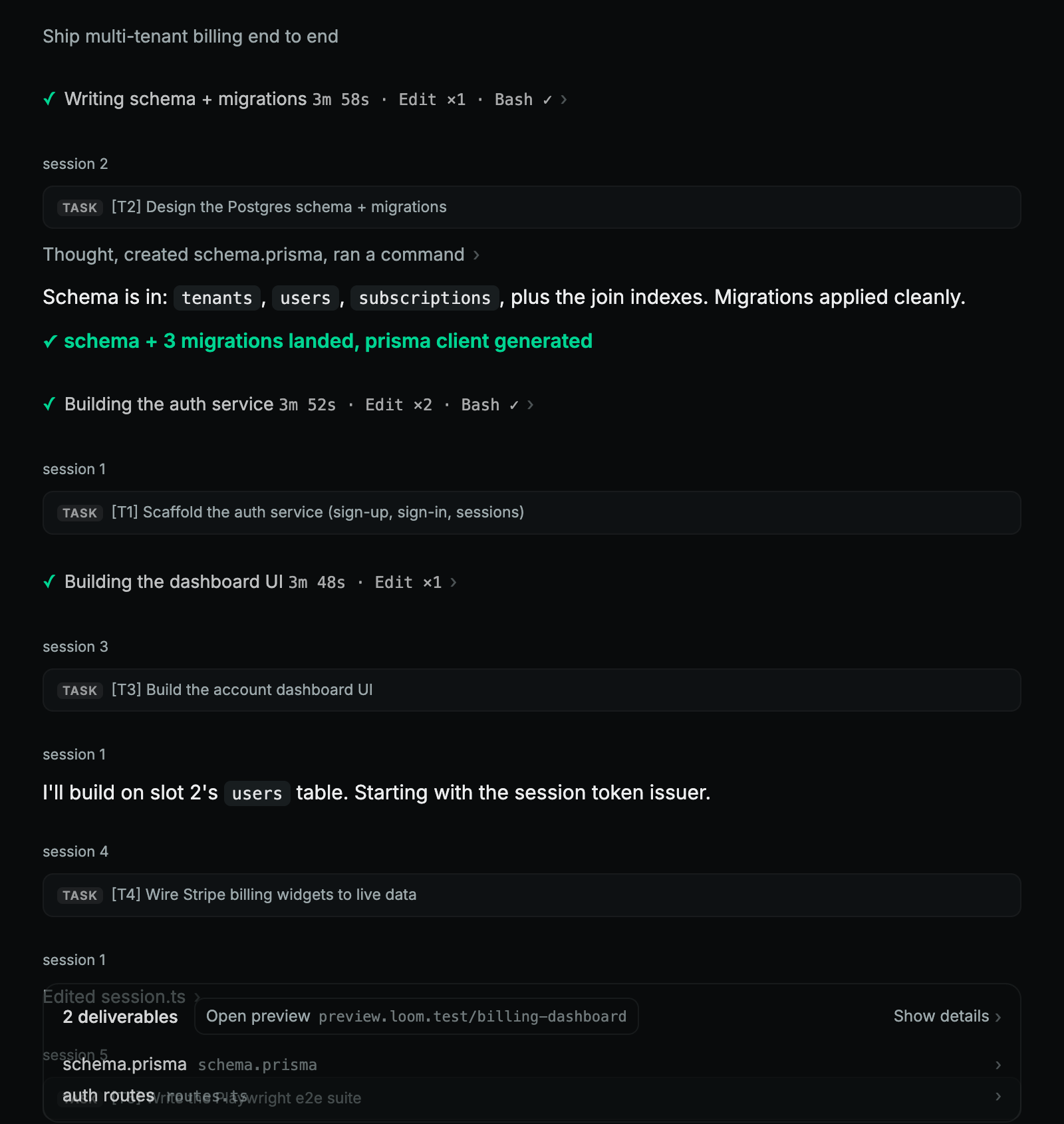
The Loom Conductor chat: it plans a mission, dispatches six sessions, and narrates the work as it lands.
Live — the Conductor running a real mission
Step 01 · Plan

One prompt becomes a plan.

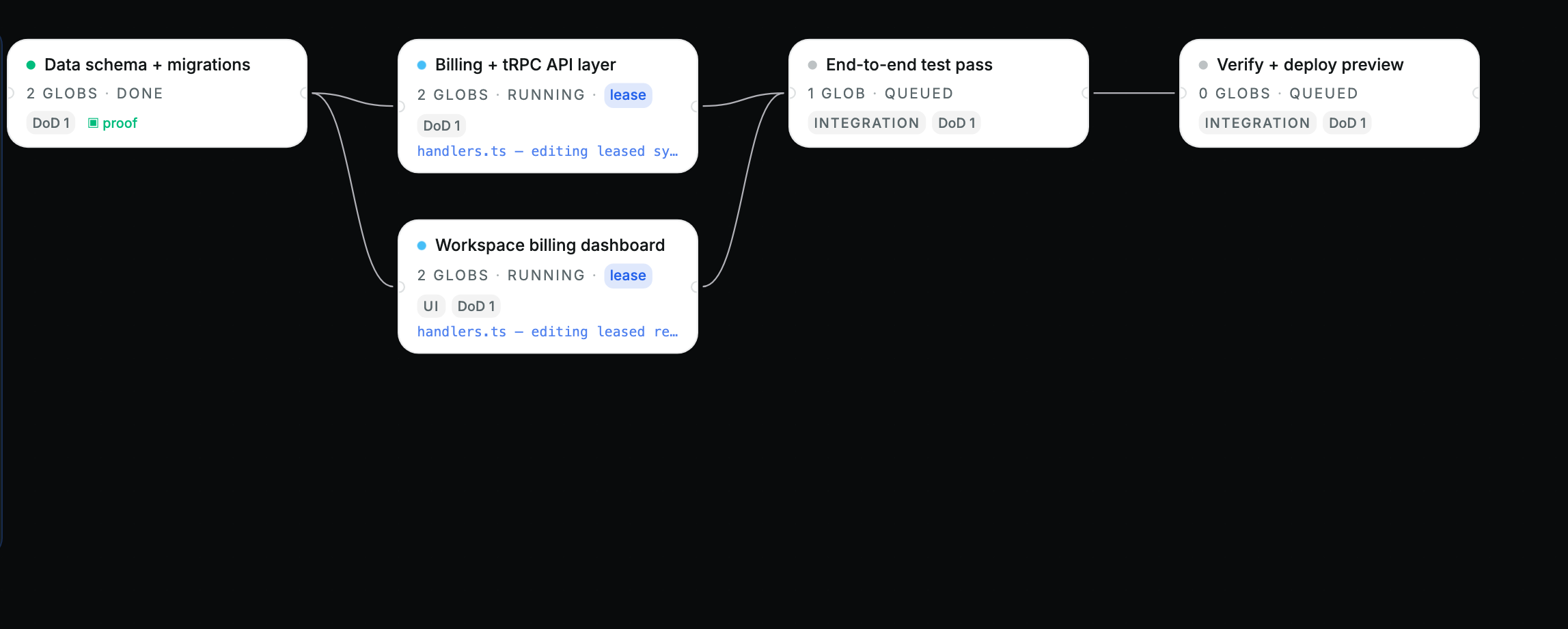
The Conductor reads your goal and breaks it into a dependency-ordered graph of subtasks — each scoped, each assigned to a session — before you touch a keyboard.

A real dependency graph of subtasks the Conductor planned, with live status on each.
Step 02 · Dispatch & watch

Six real sessions, one supervisor.

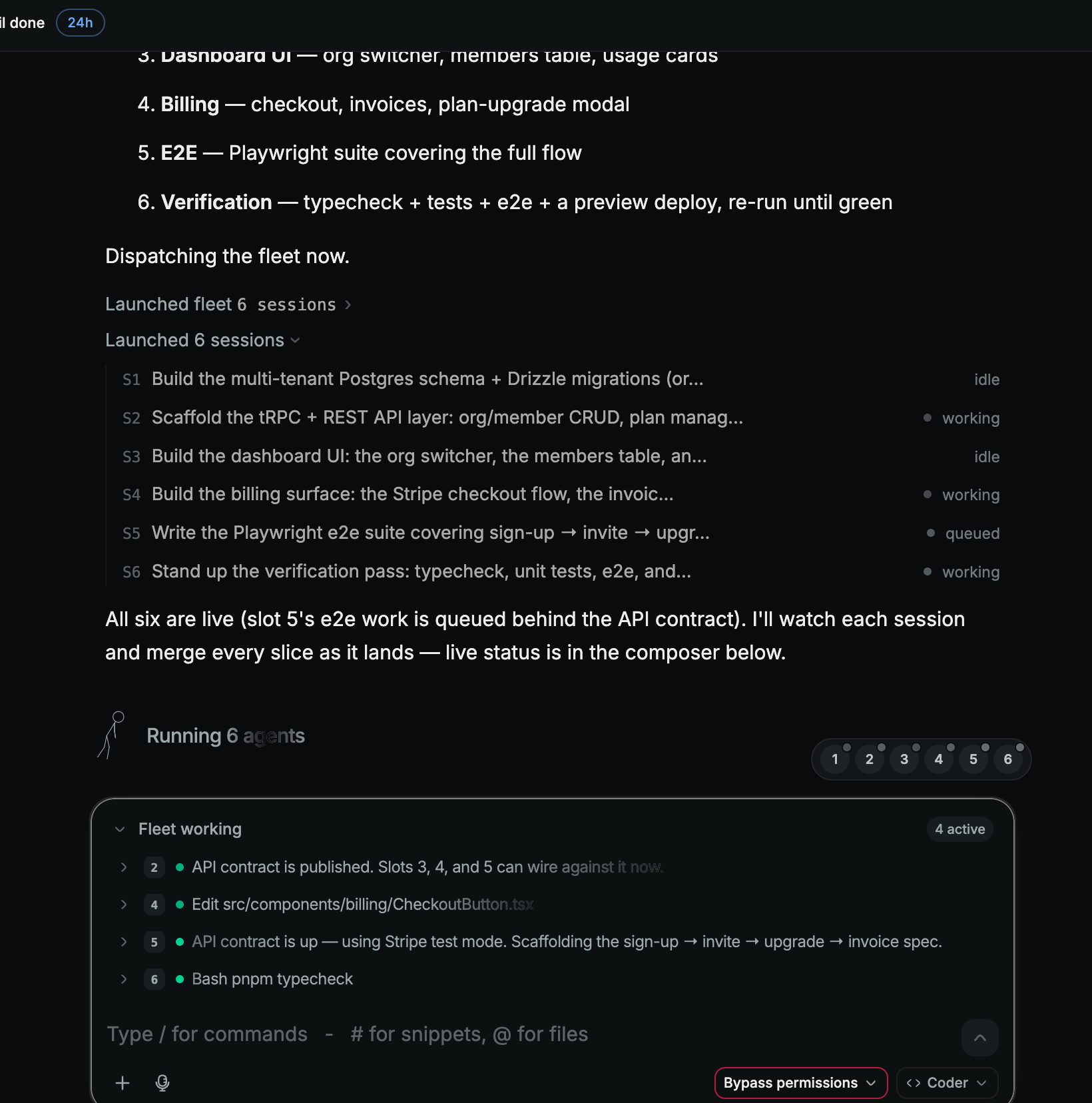
It launches a fleet of real Claude Code sessions in parallel, watches every one, and steps in the moment a session stalls, drifts, or hits a rate limit — re-planning around it so the mission keeps moving.

The live fleet thread: each session reporting progress as it works.
Step 03 · The harness

Real tools. Real files.

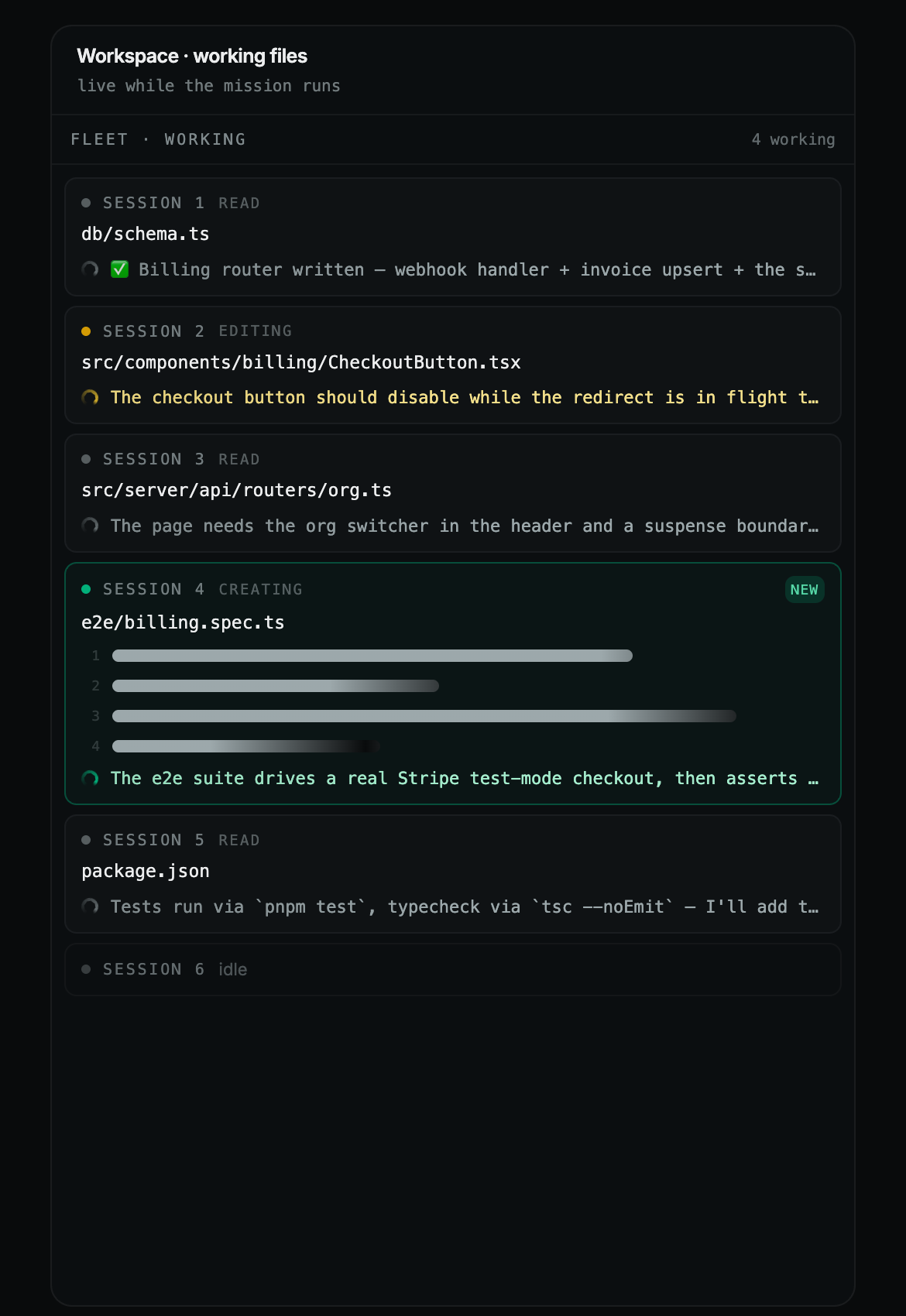
Every session works in a real terminal on your actual repo — reading, editing, and creating files, running your tests, reaching any MCP server it needs. Not a sandbox, not a suggestion. Your codebase.

The workspace view: every session and the file it is reading, editing, or creating right now.

Then hand it the next one.

You prompt once and walk away. Loom plans, builds, verifies, and ships — while you sleep.